Openai/695c5ea4-a350-8007-be73-0d306fd1bba0
This conversation was exported from ChatGPT[1]
gpt-5-2[edit | edit source]
User: I've heard that mesomorph, ectomorph, and all those aren't actually grounded in any research.[edit | edit source]
I've heard that mesomorph, ectomorph, and all those aren't actually grounded in any research. Is this true? Are there body shapes that change rates of fat loss or muscle gain? What about the Casey Butts & Mayo clinic wrist measurements?
Assistant: Short answer: you’re right to be skeptical.[edit | edit source]
Short answer: you’re right to be skeptical. The classic ectomorph / mesomorph / endomorph system is not scientifically grounded, but there are real anatomical differences between people that affect muscle gain, fat loss, and strength potential. They’re just more nuanced (and measurable) than somatotypes.
Let’s break this down cleanly.
1️⃣ Are ectomorph / mesomorph / endomorph real?[edit | edit source]
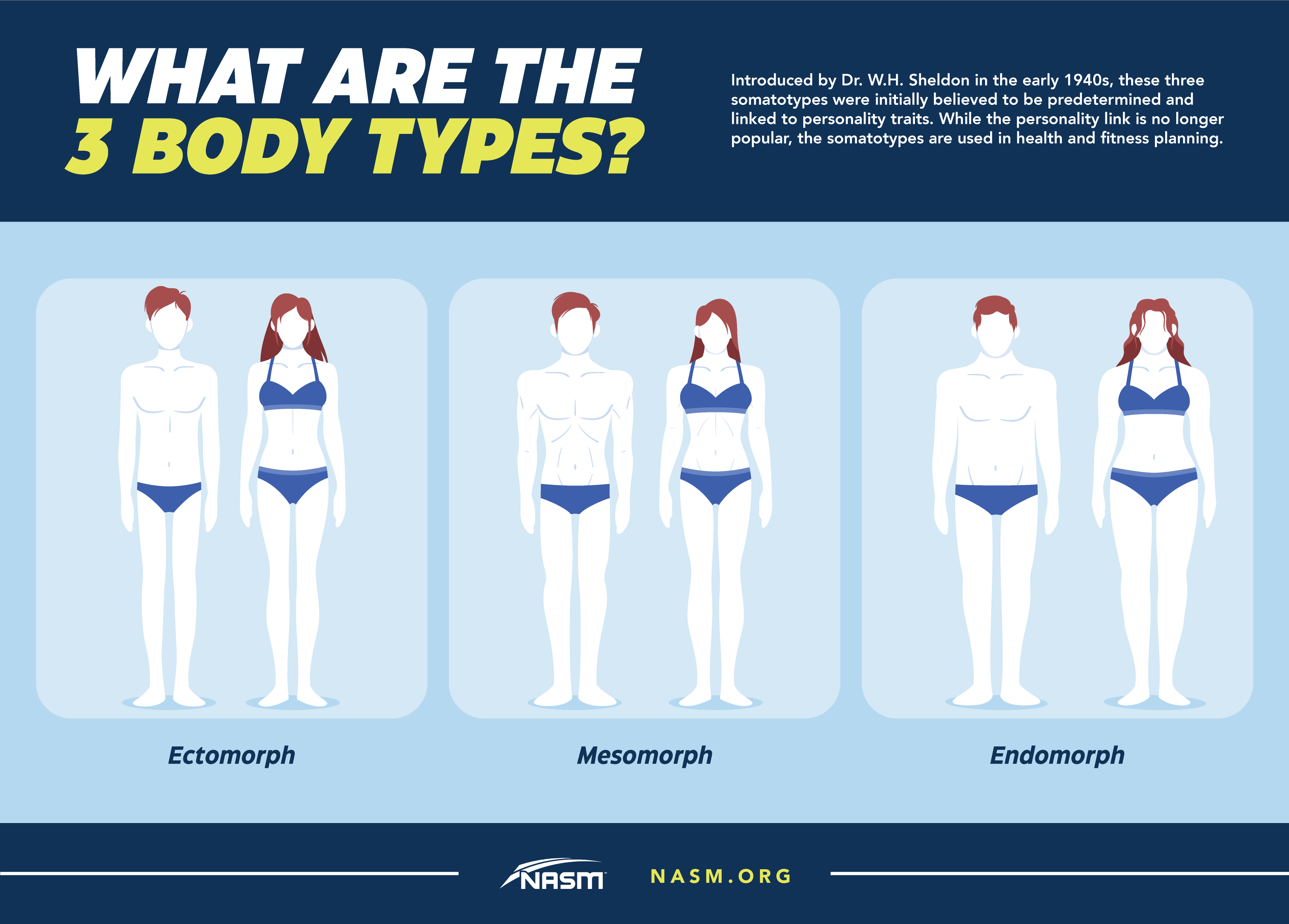
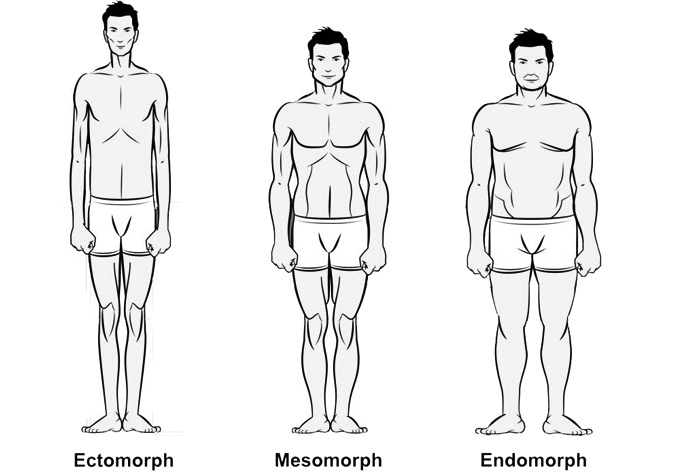
!https://blog\.nasm\.org/hs\-fs/hubfs/Infographic%208\-V7\.png?height=2581&name=Infographic\+8\-V7\.png&width=3601[2] !https://study\.com/cimages/multimages/16/bodytypes\.jpg[3] !https://www\.simplypsychology\.org/wp\-content/uploads/Somatotypes\.jpeg[4]


Mostly no — at least not in the way fitness culture uses them.
- The system comes from William Sheldon (1940s), who tied body types to personality traits (which is… very debunked).
- Modern exercise physiology does not classify humans into three discrete metabolic types.
- Most people are mixed, and can shift appearance dramatically with training and diet.
What research says:[edit | edit source]
- No evidence that “ectomorphs can’t gain muscle”
- No evidence that “endomorphs gain fat easier due to a body type”
- No evidence of fixed, categorical metabolic classes
📌 Somatotypes are descriptive, not predictive. They describe how someone looks at a moment in time, not how their body fundamentally works.
2️⃣ BUT — are there real differences that affect muscle & fat?[edit | edit source]
Yes. Very real ones. Just not the cartoon version.
Here are the actual variables that matter:
🦴 1. Skeletal structure (bone size & proportions)[edit | edit source]
- Wrist, ankle, clavicle width
- Rib cage depth
- Pelvis width
- Limb length ratios
These affect:
- Maximum muscle cross-sectional area
- Leverages for strength
- Visual “thickness” at the same bodyweight
This is where wrist measurements can matter (more below).
🧬 2. Muscle fiber composition[edit | edit source]
- Type I (endurance-biased)
- Type II (strength/power-biased)
This affects:
- Rate of strength gain
- Response to volume vs intensity
- Recovery demands
But:
- Fiber type is modifiable
- Differences are gradual, not binary
🔥 3. Resting energy expenditure (REE)[edit | edit source]
Some people burn:
- 5–10% more calories at rest
- due to organ size, lean mass, NEAT tendencies
This is real, but:
- Not large enough to justify “hardgainer” myths
- Usually dwarfed by food tracking errors
🧠 4. Appetite & satiety signaling[edit | edit source]
Often mistaken for “metabolism”
- Hunger hormones (ghrelin, leptin)
- Stress eating tendencies
- Food reward sensitivity
Two people with identical metabolisms can eat 1,000 kcal apart daily without noticing.
3️⃣ What about wrist measurements (Casey Butt & Mayo Clinic)?[edit | edit source]
This is where things get interesting — and partially legitimate.
🧑🔬 Casey Butt[edit | edit source]
Casey Butt used wrist & ankle circumference to estimate:
- Natural muscular potential
- Based on frame size + historical data from elite naturals
His logic:
- Bone size limits how much muscle can attach and be supported.
This is directionally correct, but often over-interpreted.
✔️ Useful for:
- Estimating upper bounds
- Explaining why two people at the same height look very different
- Setting realistic long-term expectations
❌ Not useful for:
- Predicting yearly gains
- Deciding training style
- Saying “you can’t reach X lift”
🏥 Mayo Clinic wrist/frame size categories[edit | edit source]
The Mayo Clinic uses wrist circumference to classify:
- Small / medium / large frame
This is purely descriptive, mainly for:
- BMI interpretation
- Health risk context
It does not claim:
- Different metabolisms
- Different fat-loss rules
- Different hypertrophy responses
📌 It’s about structure, not destiny.
4️⃣ So… do body “types” exist at all?[edit | edit source]
Here’s the accurate version:
❌ Myth[edit | edit source]
- “I’m an ectomorph, so I can’t gain muscle.”
✅ Reality[edit | edit source]
- “I have a smaller skeletal frame, longer limbs, lower starting lean mass, and weaker appetite signals — so I need more time, food, and mechanical tension.”
That’s not a body type. That’s variables you can work with.
5️⃣ Practical takeaway (especially for lifters like you)[edit | edit source]
Given your background as a serious lifter:
- Bone structure affects visual thickness & ceiling, not progress
- Strength & hypertrophy are rate-limited by recovery and programming, not somatotype
- Wrist measurements help contextualize expectations, not cap ambition
Most importantly:
- Training turns “ectomorphs” into “mesomorphs” all the time.
Because those labels were never causal to begin with.
If you want, next we can:[edit | edit source]
- Translate wrist/ankle measurements into realistic strength ceilings
- Talk about why some people feel like hardgainers even when they aren’t
- Break down why endurance vs power bias matters more than somatotypes
Just tell me where you want to go next 💪
References[edit | edit source]
- ↑ "Somatotypes and Body Types". ChatGPT. Retrieved 2026-01-05.
- ↑ "https://blog\.nasm\.org/hs\-fs/hubfs/Infographic%208\-V7\.png?height=2581&name=Infographic\+8\-V7\.png&width=3601". blog.nasm.org. Retrieved 2026-01-05.
{{cite web}}: External link in|title= - ↑ "https://study\.com/cimages/multimages/16/bodytypes\.jpg". study.com. Retrieved 2026-01-05.
{{cite web}}: External link in|title= - ↑ "https://www\.simplypsychology\.org/wp\-content/uploads/Somatotypes\.jpeg". simplypsychology.org. Retrieved 2026-01-05.
{{cite web}}: External link in|title=