Openai/695abf4e-2b24-800b-8c33-6814a33e7fe7
This conversation was exported from ChatGPT[1]
gpt-5-2[edit | edit source]
User: What happend when venezula threw out the oil companies?[edit | edit source]
What happend when venezula threw out the oil companies?
Assistant: When Venezuela pushed out foreign oil companies, the effects unfolded over several stages—short-term gains followed by …[edit | edit source]
When Venezuela pushed out foreign oil companies, the effects unfolded over several stages—short-term gains followed by long-term economic damage.
!https://media\-cldnry\.s\-nbcnews\.com/image/upload/t\_fit\-760w%2Cf\_auto%2Cq\_auto%3Abest/msnbc/Components/Art/BUSINESS/070501/AP\_VENEZUELA\_OIL\.gif[2] !https://assets\.bwbx\.io/images/users/iqjWHBFdfxIU/idWFnrRmee7k/v0/\-1x\-1\.webp[3] !https://venezuelanalysis\.com/wp\-content/uploads/1970/01/chavez\_orinoco\.jpg\.webp[4] 4


What actually happened[edit | edit source]
1. Nationalization (mid-2000s)[edit | edit source]
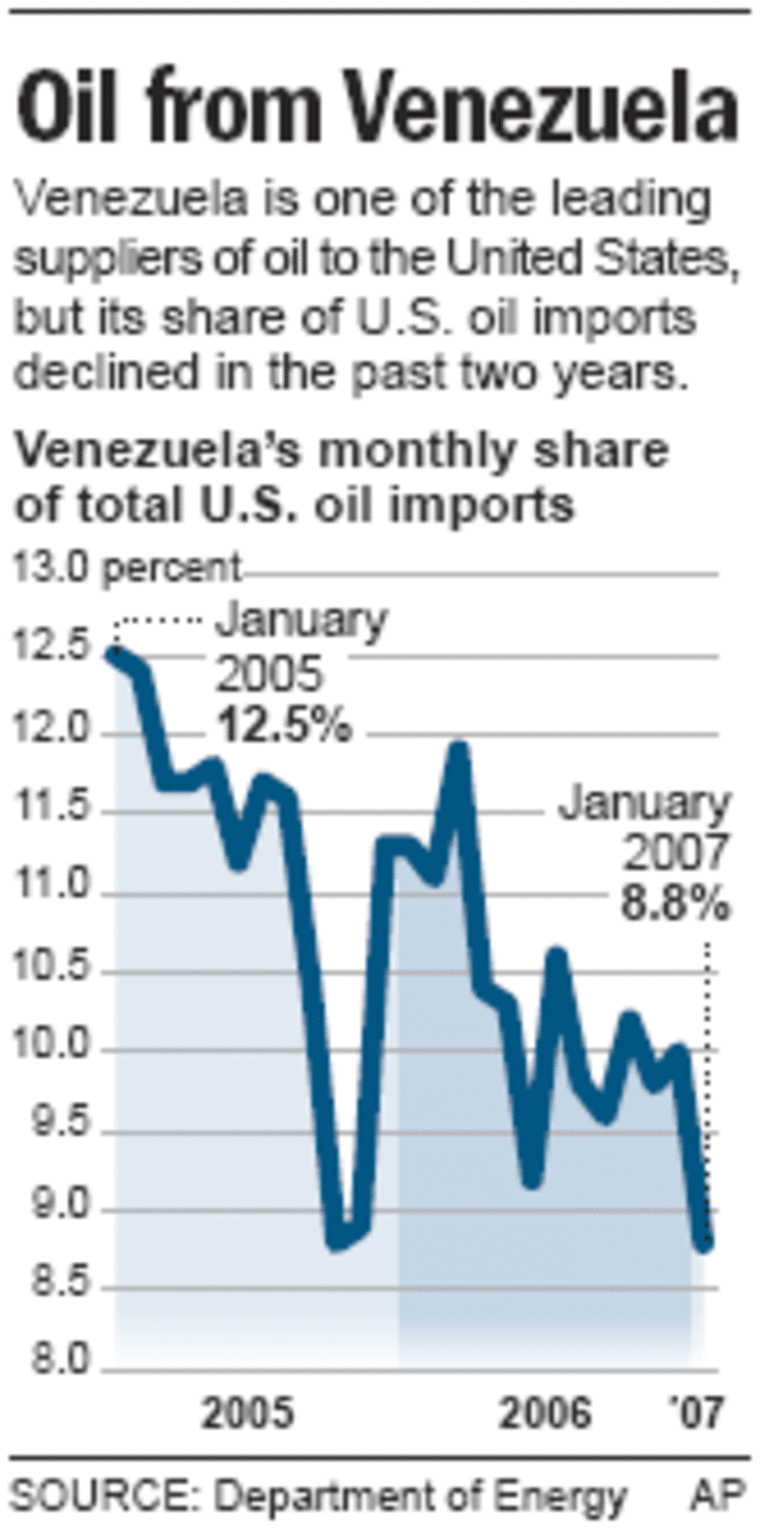
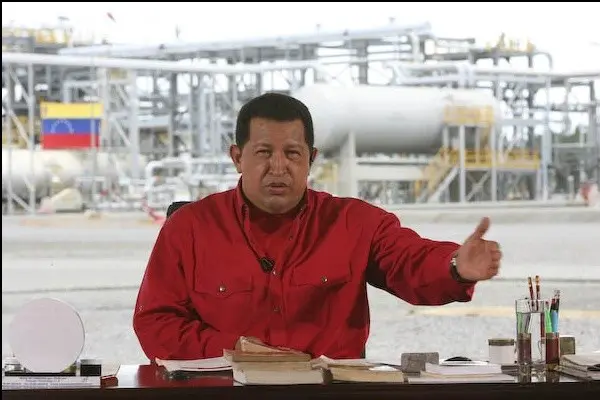
Under Hugo Chávez, Venezuela nationalized major oil projects around 2007. Foreign firms (like ExxonMobil and ConocoPhillips) were forced to accept minority stakes or leave.
Control shifted to the state oil company PDVSA.
2. Short-term boost[edit | edit source]
- Oil prices were high
- Government revenues surged
- Money funded social programs, subsidies, and price controls
- Poverty initially fell
At this stage, the policy looked successful.
3. Loss of expertise and investment[edit | edit source]
Over time:
- Foreign engineers, managers, and capital disappeared
- Maintenance declined
- Political loyalty replaced technical competence
- PDVSA was used as a cash machine instead of a business
Oil is capital- and skill-intensive; state control alone wasn’t enough.
4. Production collapse[edit | edit source]
Oil output fell dramatically:
- From ~3 million barrels/day in the late 1990s
- To well under 1 million barrels/day by the late 2010s
Refineries failed, spills increased, and exports dropped.
5. Economic freefall[edit | edit source]
Because oil made up ~95% of export revenue:
- Government ran out of dollars
- Imports collapsed (food, medicine, parts)
- Hyperinflation hit
- Mass emigration followed (millions left)
US sanctions later worsened the crisis—but the decline began before sanctions.
Bottom line[edit | edit source]
Throwing out oil companies:
- Worked briefly when prices were high
- Failed long-term due to mismanagement, underinvestment, and politicization
It wasn’t nationalization alone that caused the collapse—but nationalization without competent management, reinvestment, and transparency.
If you want, I can compare this to countries where national oil companies did succeed (like Norway or Saudi Arabia) and explain what Venezuela did differently.
References[edit | edit source]
- ↑ "Venezuela Oil Nationalization". ChatGPT. Retrieved 2026-01-05.
- ↑ "https://media\-cldnry\.s\-nbcnews\.com/image/upload/t\_fit\-760w%2Cf\_auto%2Cq\_auto%3Abest/msnbc/Components/Art/BUSINESS/070501/AP\_VENEZUELA\_OIL\.gif". media-cldnry.s-nbcnews.com. Retrieved 2026-01-05.
{{cite web}}: External link in|title= - ↑ "https://assets\.bwbx\.io/images/users/iqjWHBFdfxIU/idWFnrRmee7k/v0/\-1x\-1\.webp". assets.bwbx.io. Retrieved 2026-01-05.
{{cite web}}: External link in|title= - ↑ "https://venezuelanalysis\.com/wp\-content/uploads/1970/01/chavez\_orinoco\.jpg\.webp". venezuelanalysis.com. Retrieved 2026-01-05.
{{cite web}}: External link in|title=